
How to Check Criminal History in Graham County
Start a Graham County criminal record check with the part of the system that answers the question at hand. The North Carolina eCourts Portal gives free public case summaries through Smart Search. Narrow the location to Graham County and use a full name or complete case number when possible. The Judicial Branch says Portal is not the channel for an official background check, so confirm a result through the Clerk of Superior Court. The clerk also gives access to a free courthouse terminal and to filed documents that may not appear online.
Gather name spellings, aliases, an approximate event date, the agency involved, and any case or report number before contacting an office. Those facts help staff separate people with similar names and locate older paper material. Use this Graham County sequence:
- Search eCourts Smart Search for a public case summary and filter to the correct county.
- Verify the case number, charge status, hearings, and disposition with the Graham County clerk.
- Use the courthouse terminal or request the filed paper or electronic document when the summary lacks needed detail.
- Call Graham County Jail for present custody, or ask the sheriff for an existing incident, arrest, or booking record.
- Use SBI Right to Review for your own statewide fingerprint-supported record and correct gaps at the source.
The Judicial Branch criminal-record check page shows the official county search choices.
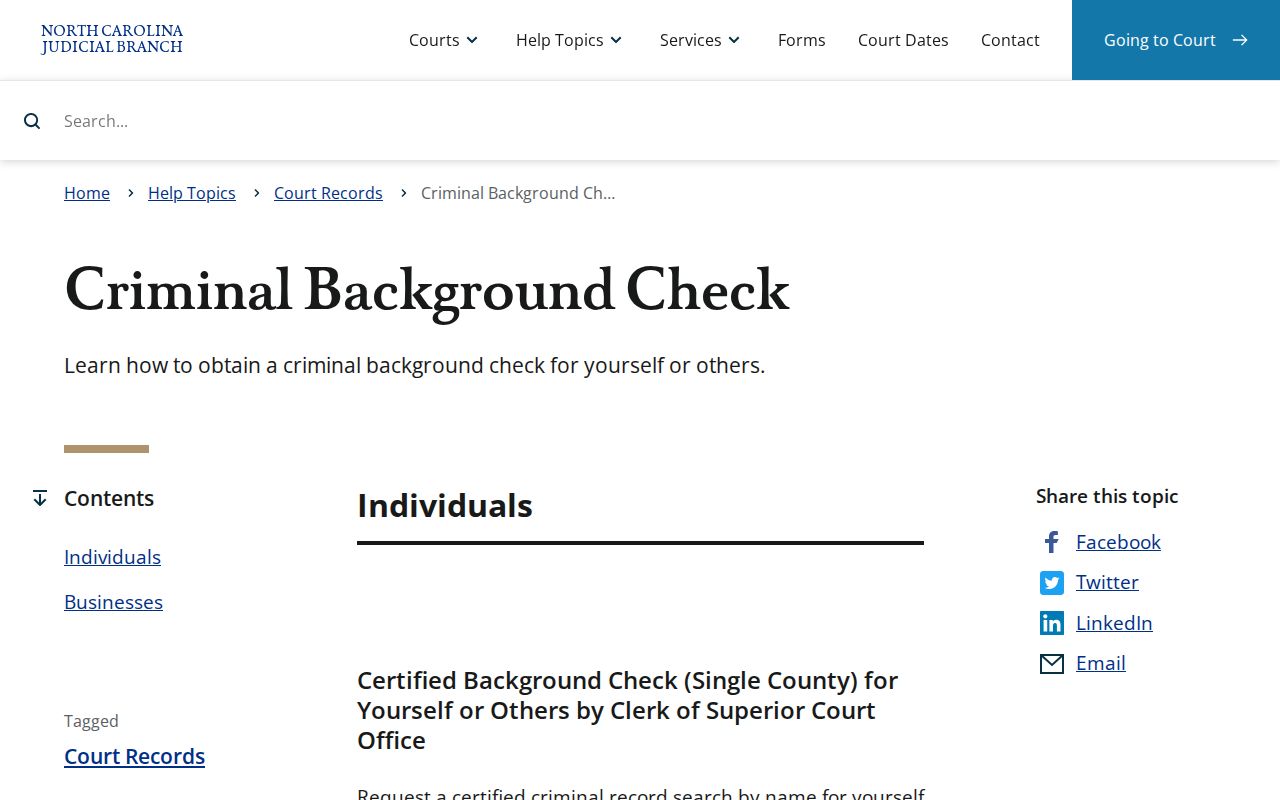
That distinction matters because a free case view, a certified county name search, and a fingerprint-based state review answer different questions.
Graham County eCourts Record Search
North Carolina completed the statewide Enterprise Justice rollout in October 2025, so Graham County case information now shares one online layer with all 100 counties. Smart Search accepts a party name or case number. Official guidance describes a four-part case number with a two-digit year, case type letters, a six-digit sequence, and a three-digit county identifier. A partial case number needs at least four characters followed by an asterisk. Name wildcards require at least three last-name characters and one first-name character before the asterisk.
The result may show the case header, party roles, charges, hearing details, judgment data, and a Register of Actions. The register is a dated list of filed events. It is not always the filed document itself. If a Graham County order, motion, or judgment is not downloadable, ask the clerk to inspect or copy the official file.
| Search control | Use | Limit |
|---|---|---|
| Search term | Party name or case number | At least one search term |
| Location | Narrow to Graham County | Wrong locations can produce false matches |
| Case type | Focus on criminal matters | Live options can change |
| Status or date | Refine judgments and results | A new event may not yet appear |
Note: An empty Portal search does not rule out a legacy file, a recent filing, restricted material, or a spelling mismatch.
Official North Carolina Background Checks
Graham County has two official routes with different reach. The Clerk of Superior Court provides a certified, name-based search of Graham County court records for $25. Submit the current AOC-CR-314 form at the counter or by mail. Mail requests accept a money order or certified check, not a personal check. Counter requests may be paid by credit card, cash, money order, or certified check. This product covers county court records, not a complete statewide SBI file.
The North Carolina State Bureau of Investigation, Criminal Information and Identification Section, maintains the central fingerprint-based repository. A person can obtain their own non-certified statewide record through the SBI Right to Review process. It requires a complete fingerprint card, the request form, identification, and the current fee. Graham County residents should ask local law enforcement whether fingerprint cards are available and confirm cost and hours first. No general-public SBI name search exists. A person seeking their own federal identity history can use the FBI's electronic eDO request channel or mail a fingerprint card under the FBI process.
The SBI repository overview depicts the state criminal-information function.
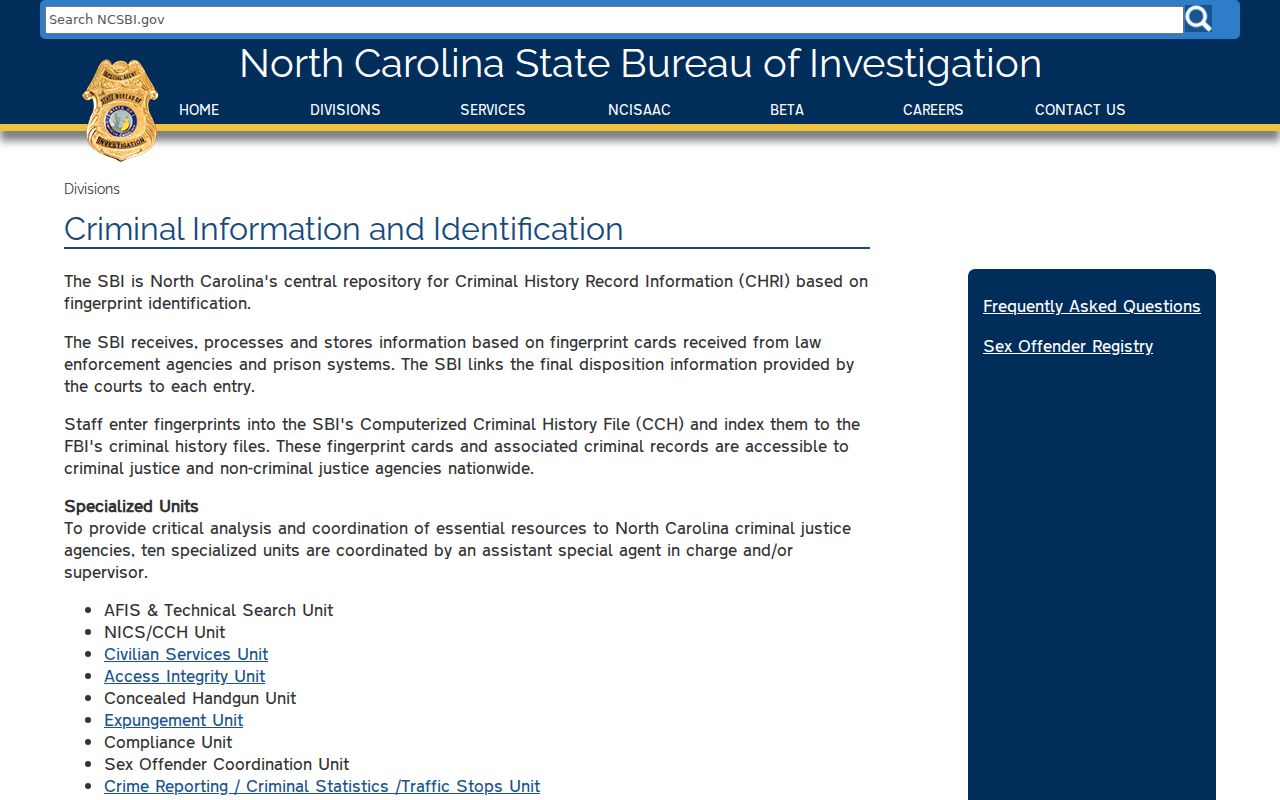
Fingerprint matching ties an identity to an arrest cycle more firmly than a name alone, but a missing court outcome may still require correction.
Two Graham County Record Doors
Downtown Robbinsville makes a key records boundary easy to see. Graham County Courthouse sits at 12 Court Street, while Graham County Jail is across the street at 11 Court Street. Their files remain legally distinct. The clerk controls District and Superior Court cases, certified county name searches, judgments, and copies. The jail answers current custody questions and maintains booking information with the sheriff. A person may appear in one system before another, or may have a booking record even when the filed charge later changes.
Call the clerk at 828-479-7000 for court files. The counter is open Monday through Friday, 8:00 a.m. to 5:00 p.m. Call the jail at 828-479-8650 for current county custody. Sheriff administration is at 300 Rodney Orr Bypass and can be reached at 828-479-3352 for local agency-record questions. Graham County does not publish a verified live jail roster or recent-booking blotter, so the phone and focused records-request routes are the reliable fallback.
Graham County Records Offices
Clerk: 12 Court St., 828-479-7000
Jail: 11 Court St., 828-479-8650
Sheriff: 300 Rodney Orr Bypass, 828-479-3352
Robbinsville, NC 28771
The official courthouse location page confirms the court address and public hours.
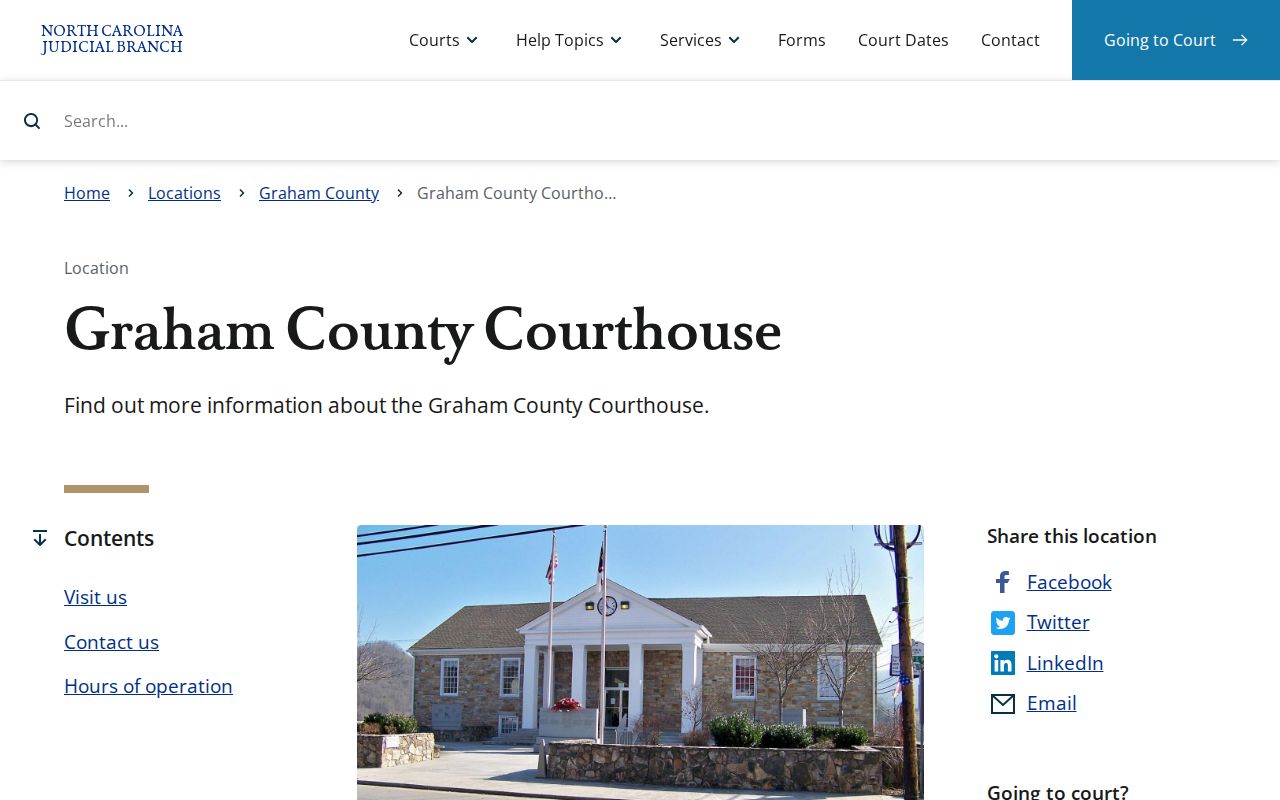
The close buildings save distance, but the right door still depends on whether the reader needs custody facts or a court outcome.
Types of Criminal Records
Each Graham County criminal record begins with a specific act by a public office. An incident or arrest report describes the event and agency action. Admission to the jail creates a booking and custody record. A charging paper starts or advances prosecution, while the clerk's case file records hearings, pleas, orders, judgments, and financial obligations. Fingerprints may later connect the arrest cycle with a disposition in the SBI repository.
- Incident and arrest reports: held by the sheriff or other agency that created the report.
- Booking and custody records: held by Graham County Jail and the sheriff.
- District and Superior Court files: maintained by the Graham County Clerk of Superior Court.
- State criminal history: fingerprint-supported entries maintained by SBI and available to the subject through Right to Review.
- Correctional records: prison, probation, parole, or post-release information maintained by NCDAC.
- Registry records: local registration data entered by the sheriff and published through the SBI registry.
North Carolina charge classes also appear in Graham County court files. Superior Court hears felony trials, while District Court generally hears misdemeanors and felony preliminary matters. Felonies run from Class A through Class I. Misdemeanors use Classes A1, 1, 2, and 3. The class is not the sentence. A judgment must be read with the offense date, prior-record level, and any findings under the current sentencing law.
A booking shows custody, not guilt. A pending court summary states allegations, not a final result. A DAC entry covers a correctional relationship and does not list every Graham County arrest. Readers comparing these records should label each fact by its source and date.
Graham County Warrant Record Checks
No official Graham County public warrant-search portal or verified warrant list was found. For a possible warrant concerning your own case, call the sheriff at 828-479-3352, the clerk at 828-479-7000, or the magistrate at 828-479-7019. Ask for the case number, issuing court, and safe instructions for counsel or appearance when staff can provide them. Do not appear without first asking what the court or law-enforcement office requires.
eCourts may show case events tied to process, but a missing online entry does not prove that no warrant or order exists. Some process stays restricted until service. An arrest warrant starts a charge, an order for arrest often follows a failure to appear or comply, and a search warrant authorizes a search of a place or property. These are not interchangeable records. Never try to detain or confront another person based on a record search.
Note: Use 911 only for an emergency; routine warrant questions belong with the Graham County sheriff, clerk, or magistrate.
What a Graham County Criminal Record Shows
A Graham County record can contain names or aliases, limited identifying facts, agency and county, event dates, case numbers, charges, statutes, bond terms, hearing dates, pleas, dispositions, sentences, and correctional status. The actual fields depend on the record layer. Public views suppress protected data such as Social Security numbers, account details, and some victim or juvenile information. Read the status and source before drawing a conclusion.
| Name and identifiers | Legal name, aliases, and limited demographic details used for matching. |
|---|---|
| Arrest or booking | Agency, date, charges received, bond or hold, and custody context when released. |
| Charges and statutes | Offense text, cited law, class, and changes recorded by the court. |
| Disposition | Outcome such as conviction, dismissal, acquittal, or another court result. |
| Sentence | Judgment terms, costs, restitution, and custody or community supervision. |
| Case activity | Hearings, filed actions, orders, and other events in the Register of Actions. |
Useful terms include the following:
- Disposition
- The court outcome for a charge.
- Nolle prosequi
- A prosecutor's formal choice not to proceed with a charge at that time.
- Bond
- Terms and financial assurance meant to secure a court appearance.
- Expunction
- A statutory process that removes eligible records from ordinary public access.
Graham County Custody and Supervision
Current jail custody, state prison, probation, parole, and post-release supervision occupy separate systems. Graham County Jail can answer whether someone is presently held locally. The North Carolina Department of Adult Correction public search covers active inmates, active probationers or parolees, and inactive records. Its fields include name, offender number, status, birth date, age range, gender, race, and ethnic group. A no-result there does not rule out a county-only arrest or a case that never led to NCDAC supervision.
Graham County's directory lists Community Corrections Probation at 828-479-3538. North Carolina runs community supervision at the state level, while the Post-Release Supervision and Parole Commission has the statutory decision role for eligible release matters. Public search results do not expose every supervision condition or confidential case note. Use NC DAC Offender Public Information for the public custody and supervision layer.
The official Community Supervision page explains that statewide structure.
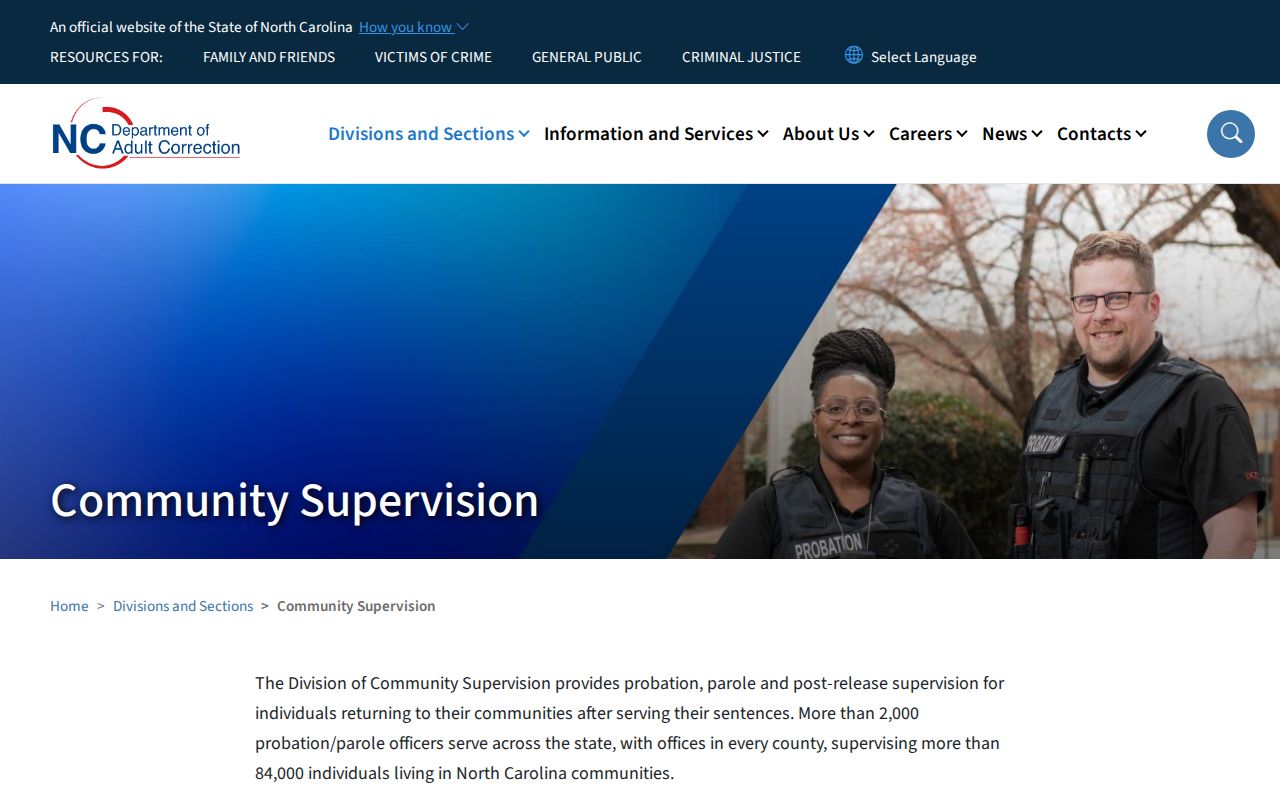
This layer is useful after sentencing, but it should never replace the Graham County clerk's judgment or the jail's present-custody response.
Public Access Laws
North Carolina law starts with access to existing public records, then applies specific limits. Ask the custodian that made or holds the record. Graham County's clerk controls court files. The sheriff or arresting agency holds reports and local booking material. SBI handles a person's fingerprint-based state review, while NCDAC handles public correctional information. An office need not create a custom list that does not exist, and protected material may be withheld or redacted.
Key North Carolina laws:
N.C.G.S. §132-1 broadly defines public records made or received in public business, subject to exceptions.
N.C.G.S. §132-6 provides for inspection and copies at reasonable times under reasonable supervision.
N.C.G.S. §132-6.2 addresses format, actual-cost copy fees, and special service charges.
N.C.G.S. §7A-109 makes clerk-held court records open unless another law provides otherwise.
Access does not erase context. Juvenile files, sealed or expunged cases, active-investigation material, protected identity data, and confidential exhibits can stay outside the public view. Graham County record users should request releasable portions when only part of a file is restricted.
Graham County Public Record Requests
The sheriff's official page does not advertise a branded records division, online report-order portal, or fixed report fee. Call 828-479-3352 before visiting because sheriff administration and the jail use different sites. A focused request should state the date range, event location, involved agency, incident or booking number if known, requested record, and preferred format. Graham County also accepts central public-record requests by email at publicrecords@grahamcounty.org, by mail to Attn: Public Records Requests, 12 North Main Street, Robbinsville, NC 28771, or by hand delivery to 196 Knight Street. County policy lists paper copies at $0.25 per page and a goal of response no later than 30 days. That is county policy, not a fixed statewide deadline. Ask for a cost estimate because extensive staff work can support a special service charge.
Police and incident records follow the creator. Ask the responding agency for the incident or offense report, not the clerk. For 911 audio or CAD operations data, Graham County Communications publishes a separate request form and asks for the incident date, time, location, type, and reference number. The office states it will make reasonable efforts within seven business days and archives audio for 30 days. Body-camera recordings follow a separate North Carolina disclosure and release process, so they should not be requested as an ordinary report copy.
| Graham County channel | Verified cost | What to expect |
|---|---|---|
| Courthouse terminal | Free search; printing may cost | Self-service during public hours |
| Certified clerk search | $25 | AOC-CR-314, Graham County records only |
| Central paper copy | $0.25 per page | Existing, focused county record |
| Jail custody call | No online fee published | Current custody information |
| Sheriff report copy | No verified fee published | Ask for an estimate and release limits |
The official Graham County website is the source for current county department routing.
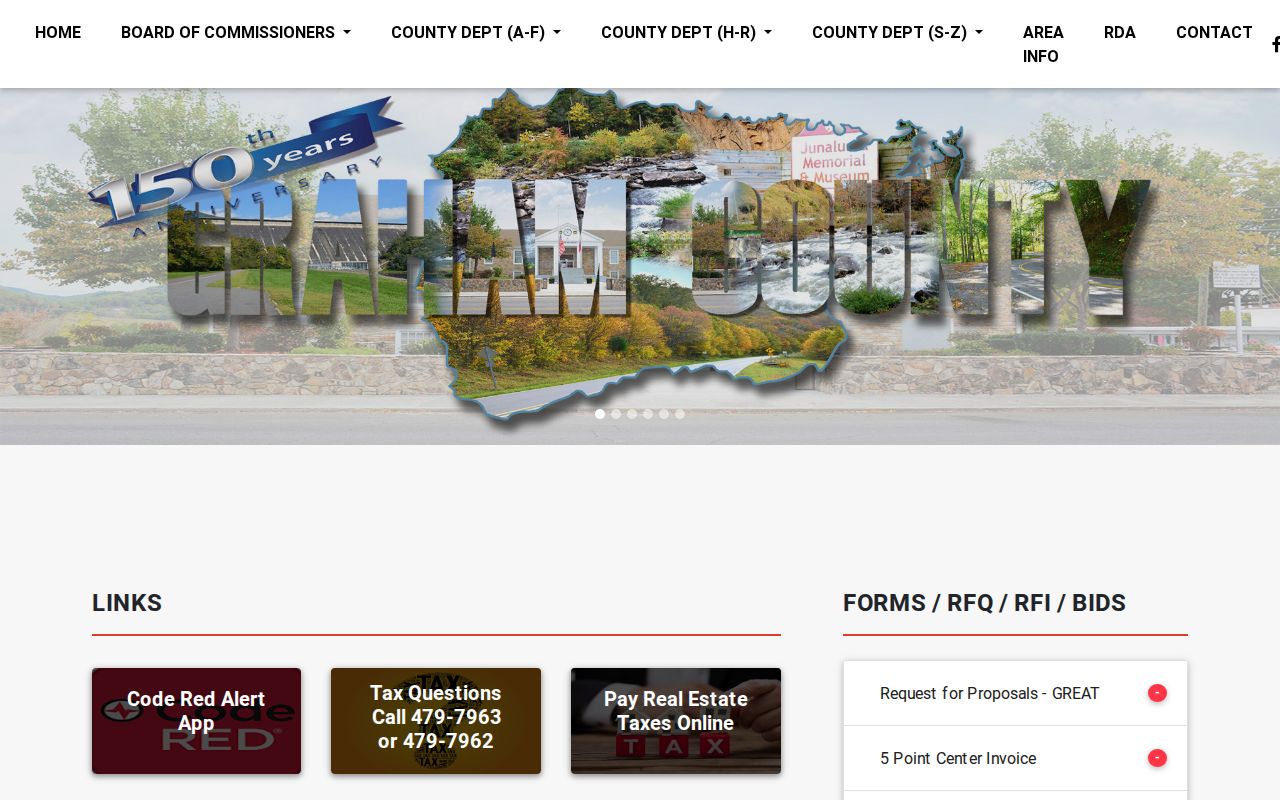
Confirm the office before sending a request, since a general county address is not the same as the jail or sheriff records counter.
Sealed, Expunged & Restricted
North Carolina uses the term expunction. Eligibility turns on the exact charge, result, prior record, age under some statutes, and waiting period. A Graham County filing usually goes through the Clerk of Superior Court in the county where the charge arose. The filer must choose the correct statewide court form and follow the service, agency-check, and hearing steps required by the governing law. Fees vary by remedy, so verify the current form and amount with the clerk.
A dismissal or not-guilty finding does not always erase every arrest or booking trace without a separate statutory process. Likewise, a missing eCourts result does not prove an expunction was granted. Juvenile matters, protected victim facts, account data, sealed filings, and confidential expunction files may remain outside ordinary public access even when other case data is open.
The North Carolina Judicial Branch expunction resource identifies the official forms and process.
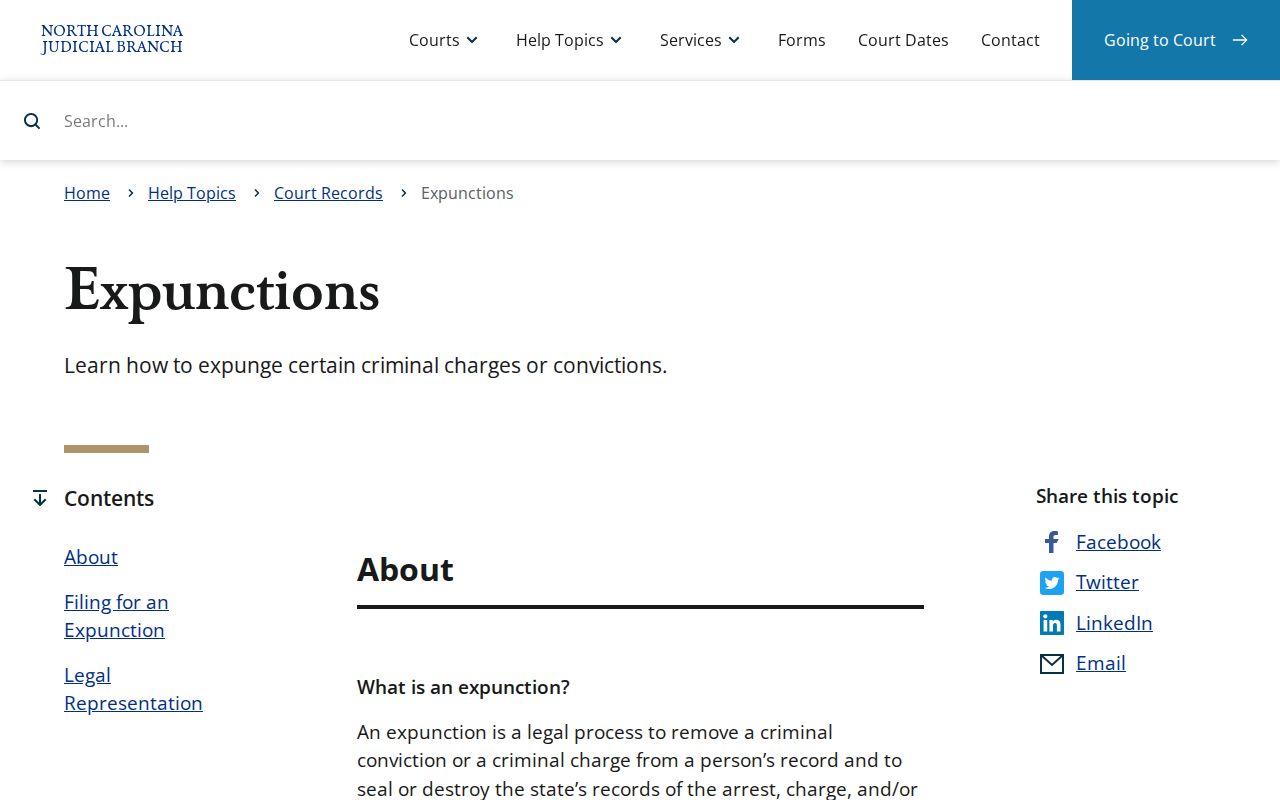
After an order, allow time for each agency to process it, then check the court and SBI records and use correction channels if a covered entry remains.
Correcting Graham County Criminal History
A fingerprint-supported SBI history can lack a disposition if the court outcome has not yet been linked to the arrest cycle. First obtain the Graham County case number and certified or filed disposition from the clerk. Compare the identity, arrest date, charge, and final result. Then contact SBI Criminal Information and Identification customer service at CIIShelp@ncsbi.gov or 919-582-8660 and follow its correction instructions. An arrest-report error should go to the agency that created the report, while a court-entry issue belongs with the clerk.
Do not assume the online system is the official last word. Older Graham County material may remain in a paper file, new courtroom activity can take time to post, and restricted records will not appear in the ordinary public view. Compare the arresting agency, clerk file, and SBI record when reviewing your own history. Keep copies of the source documents used to support a correction.
Criminal Records by City in Graham County
Graham County has three incorporated municipalities, yet county and state offices still hold most criminal records. Robbinsville is the county seat and records hub. Fontana Dam and Lake Santeetlah rely on the same unified state court and Graham County offices, with extra care needed to identify the responding agency. North Carolina has no separate municipal court system. City guides therefore focus on local geography and route readers to the sheriff, jail, clerk, and eCourts without inventing town police portals.
Robbinsville Criminal History
County seat with the Court Street clerk and jail records counters.
Fontana Dam Criminal History
Remote town where agency jurisdiction should be confirmed before a report request.
Lake Santeetlah Criminal History
Peninsula community served through county dispatch, Graham courts, and state systems.
All three routes converge on Graham County's court and records offices, but the agency named on the citation or report remains the best starting point for an incident file.
Graham County Criminal Record Geography
Only a small share of Graham County residents lives inside its three municipalities, and most land is unincorporated. That pattern helps explain why the sheriff, county jail, and state-run courts dominate records access. It also creates search traps. Results for the City of Graham in Alamance County are not Graham County records. Confirm that an address points to Robbinsville and ZIP code 28771 before relying on a courthouse or agency result.
Official crime counts should come from SBI or the FBI Crime Data Explorer with the agency and year stated. Small raw totals can create sharp percentage swings, so counts and reporting coverage are more useful than a dramatic rate. The SBI Crime Statistics resource is the official state starting point.
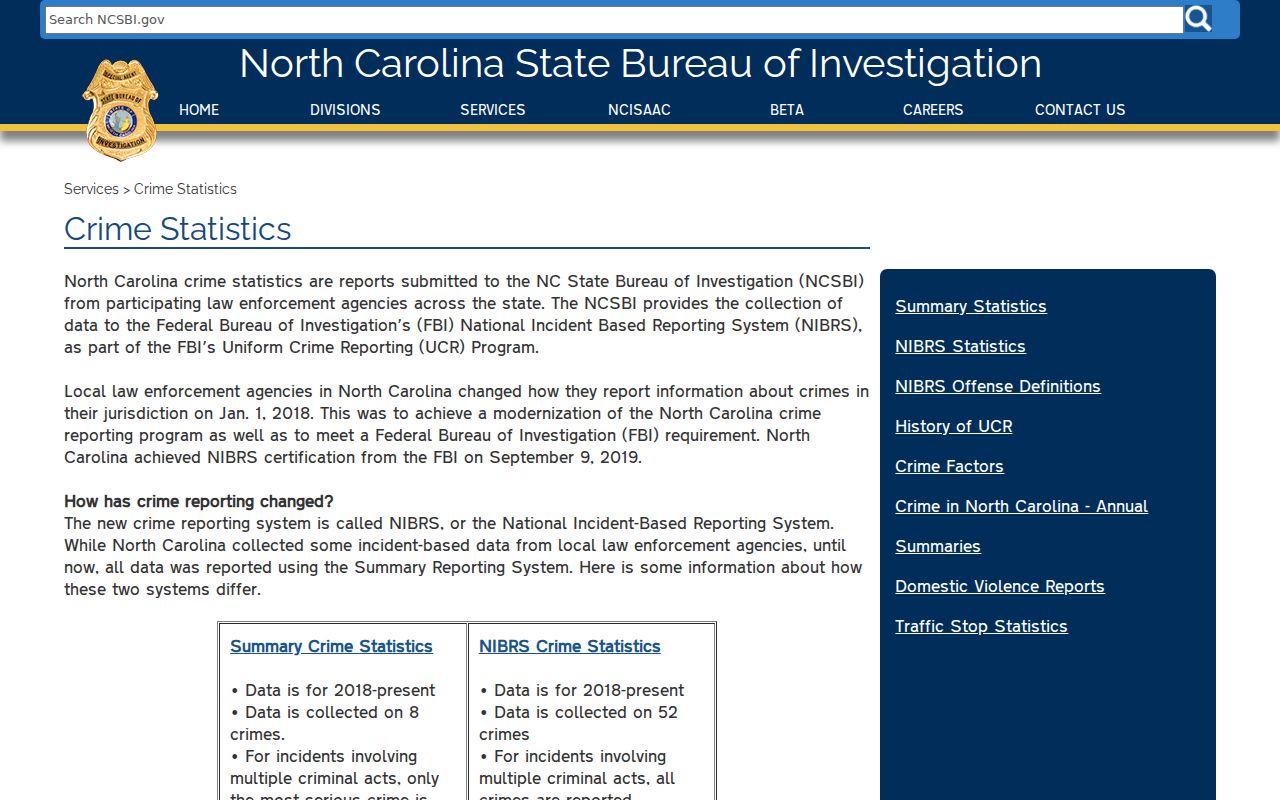
Statistics give county context, but a person-specific question still requires the underlying Graham County agency or court record.